
The Risks of Making Technology Decisions Without a Clear Plan


A computer needs replacing. An application is no longer meeting the team's needs. The office is growing, and the existing network is beginning to show its limitations.
None of these situations seems particularly unusual.
Someone identifies a problem, looks for a solution, compares the cost and makes a decision. The immediate problem gets addressed, and everyone moves on.
Then another decision comes along.
A new application requires different equipment. An older system cannot support a planned upgrade. Employees begin using several services that were never intended to work together. A relatively simple office expansion suddenly involves more changes than anyone expected.
Each individual decision may have made perfect sense.
The trouble is that the decisions were made separately, while the business operates as one connected environment.
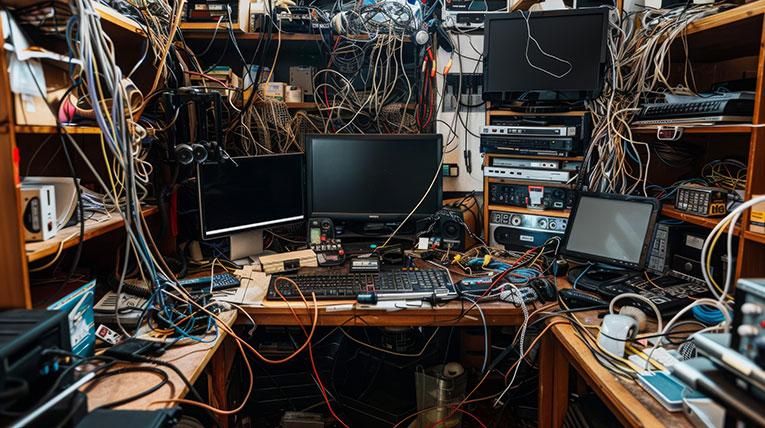
This is how technology becomes complicated without anyone deliberately making it complicated.
When solving one problem creates another
Most business owners are not interested in technology for its own sake.
They want employees to work efficiently, customers to receive reliable service and operations to run without unnecessary interruptions.
When something gets in the way, fixing it is a reasonable response.
The challenge is that technology rarely exists in isolation.
A computer depends on applications, connectivity and access to information. An application may depend on other services. A phone system may depend on the network. Remote employees may depend on several of these systems working together.
Changing one component can affect several others.
Consider a common business decision: replacing aging computers.
At first, the question appears straightforward. Which computers should the company purchase, and how much will they cost?
But what if an essential business application has compatibility limitations? What if some employees rely on information stored only on their existing computers? What if the business expects to introduce new applications or remote working arrangements within the next year?
The purchase is no longer just about computers.
It becomes a decision about how the business expects to work.
The computers might still need replacing. But understanding those dependencies before purchasing them can change what gets selected, when the work happens and what else needs attention.
The hidden cost of disconnected decisions
When businesses think about technology costs, they naturally focus on purchases, subscriptions, maintenance and support.
Those expenses are visible.
The cost of disconnected decisions is often less obvious.
It can appear as employees spending time moving information between systems that do not communicate. It can appear as additional support work needed to maintain older equipment alongside newer services.
Sometimes it appears as a second investment to correct a limitation that could have been identified during the first.
There is also the cost of uncertainty.
When nobody has a clear view of the technology environment, even a reasonable change can require considerable investigation.
Which systems will be affected? Who manages them? Is the necessary documentation available? Will an upgrade interrupt another department?
The business may eventually get the answer, but the time spent discovering it is part of the cost.
And unlike a new computer or a monthly subscription, that cost rarely appears as a clearly identified line in the budget.
A technology plan should begin with business priorities
One of the easiest mistakes is to begin technology planning by discussing products.
Which computers should we buy? Should we move another application to the cloud? Is it time to replace the network? Do we need a different service provider?
These can all be useful questions.
But they are not necessarily the first questions.
Before discussing solutions, it helps to understand what the business is trying to accomplish.
Perhaps the company is preparing to hire more employees. Perhaps interruptions are affecting productivity. Maybe several systems are approaching the end of their useful lives, or technology spending has become difficult to predict.
Each situation creates different priorities.
For a growing company, flexibility and capacity may matter most.
For a business experiencing repeated interruptions, reliability may deserve immediate attention.
For an organization with several aging systems, the challenge may be deciding which replacement needs to happen first.
A useful technology plan connects business priorities to technology decisions, rather than treating every request as an independent purchase.
This does not require a complicated strategic document.
It requires an honest conversation about what matters, what is changing and what technology needs to support.
Understanding what depends on what
Before making significant changes, it helps to understand the relationships between systems.
Not every dependency is obvious.
A business might know that employees use a particular application every day without knowing exactly where its information is stored or what other services it requires.
A company may depend heavily on its internet connection without having considered how many everyday activities would stop during an extended interruption.
An older server might appear to be a candidate for replacement until someone discovers that a critical application still relies on it.
These relationships matter because they influence both risk and timing.
A practical starting point is to identify the systems that employees genuinely depend on and ask:
- What business activity does this system support?
- What other technology does it need to function?
- Who is responsible for maintaining it?
- What would happen if it became unavailable?
- Are there known limitations or upcoming changes?
The purpose is not to produce an enormous technical inventory.
It is to make important dependencies visible before they become expensive surprises.
That understanding also helps distinguish between an inconvenience and a genuine operational priority.
The order of decisions can matter more than the decisions themselves
Imagine a business planning three improvements: replacing older computers, introducing a new business application and upgrading its network.
All three projects may be justified.
But should they happen in that order?
What if the new application has different computer requirements? What if its performance depends on improvements to the network? What if replacing computers first means repeating part of the configuration work later?
Without looking at the relationships, the business could complete all three projects and still spend more time and money than necessary.
A technology roadmap helps answer the sequencing question.
It identifies what needs attention immediately, what depends on something else and what can reasonably wait.
For example, the business might decide to confirm the application's requirements first, assess the network second and then select computers that support the planned environment.
That sequence is not universally correct. The point is to establish the sequence deliberately.
A roadmap does not eliminate unexpected problems.
It helps prevent predictable conflicts from being discovered only after money has been committed.
Technology planning is also financial planning
Technology spending becomes difficult to manage when decisions happen only in response to immediate problems.
A computer fails, so it gets replaced.
A subscription renews, so the business continues paying.
A server becomes unreliable, so replacement suddenly becomes urgent.
Some unexpected expenses are unavoidable. Equipment can fail without warning, and business needs can change.
But many technology investments are foreseeable.
Equipment ages. Software requirements evolve. Support arrangements expire. Growing teams need additional capacity.
A roadmap gives business owners an opportunity to anticipate these expenses.
Instead of discovering several major requirements in the same month, they can consider what may need investment over the next year or two.
That makes it easier to compare priorities, coordinate related projects and avoid treating every technology expense as an emergency.
It also creates a better basis for evaluating proposals.
The least expensive option today is not necessarily the least expensive decision over the period the business expects to use it.
Similarly, a more expensive option is not automatically better.
The meaningful question is whether the investment supports the business's needs without introducing unreasonable costs or limitations elsewhere.
Better visibility makes better planning possible
There is an important connection between technology planning and visibility.
In our related article, Simplifying IT Isn't About Fewer Vendors, It's About Better Visibility, we explore why reducing the number of technology providers does not automatically make an environment easier to manage.
A business can have relatively few vendors and still struggle to understand how its systems fit together.
It can also work with several providers and maintain a well-organized environment when responsibilities, dependencies and information are clear.
That visibility is essential to planning.
Before deciding what to replace or improve, the business needs a reasonable understanding of what already exists.
But visibility and planning are not the same thing.
Visibility helps answer: What do we have, and how does it work together?
Planning adds another question: Given where the business is going, what should we do next?
Without visibility, planning relies too heavily on assumptions.
Without planning, visibility may reveal problems without providing a clear way to prioritize them.
Both are necessary for making more deliberate decisions.
A practical roadmap for a business that does not have one

A technology roadmap does not have to cover every detail of the environment.
For many small and midsized businesses, the first version can be built around a few practical conversations.
Start with the business. Identify the operational priorities for the next 12 to 24 months. Consider growth, staffing, locations, customer expectations and any planned changes in how employees work.
Identify important dependencies. Determine which systems support essential activities and which other services those systems rely on.
Review known limitations. Look at recurring problems, aging equipment, unsupported applications, unclear responsibilities and workarounds employees have learned to live with.
Establish priorities and sequence. Separate immediate operational needs from improvements that can wait. Identify projects that must happen before others.
Create an investment outlook. Estimate the major expenses likely to arise, recognizing that some costs and timing will remain uncertain.
Review the plan regularly. Revisit priorities when the business changes, when major decisions arise or when important assumptions no longer hold.
The result does not need to be perfect.
It needs to be useful enough that the next technology decision can be considered in context.
A good sign of progress is when business owners and the people responsible for technology can explain why a project comes first, what it depends on and what outcome they expect.
Who should be part of the conversation?
Technology planning cannot be left entirely to the person who understands the equipment.
Technical knowledge is important, but it does not replace business context.
Business owners and managers understand operational priorities, financial constraints and future plans.
Employees and department leaders understand where daily work becomes difficult.
Technology professionals can help identify dependencies, limitations, risks and realistic implementation options.
Each perspective contributes something different.
Without business involvement, a technology plan can become a collection of technical improvements with uncertain value.
Without technical input, business plans can depend on assumptions about what existing systems can support.
The most useful conversations bring those perspectives together before major commitments are made.
The question worth asking before your next purchase
Not every technology decision requires a lengthy planning exercise.
Sometimes a broken computer simply needs replacing.
But when a decision affects important business systems, multiple employees or a significant investment, it deserves a wider view.
Before approving the next project, ask:
If we make this decision today, what might it prevent us from doing tomorrow?
That question will not always reveal a problem.
Sometimes it will confirm that the proposed solution is appropriate.
Other times, it may uncover a dependency, a better sequence or an upcoming requirement that changes the decision.
Either outcome is valuable.
Because the purpose of technology planning is not to eliminate every uncertainty or predict every future need.
It is to avoid making important decisions without understanding how they fit together.
And perhaps the most useful place to begin is not with the next purchase, but with the last few decisions the business has already made.
Do they support the same direction, or are they slowly pulling the technology environment in different directions?
At Nivo 5, we help businesses look at technology through the needs of their operations, understand how their systems connect and make more informed decisions about what deserves attention next.
If your business is facing several technology decisions and the right order is unclear, that is a good place to start the conversation.