
Infrastructure Bottlenecks That Affect Productivity Without Obvious Symptoms


The Hidden Cost of "Everything Seems Fine"
When organizations think about IT problems, they often picture system outages, ransomware attacks, failed servers, or employees unable to work.
The reality is that many of the most expensive infrastructure issues never trigger an alarm, create a support ticket, or generate a noticeable outage. Instead, they quietly reduce productivity day after day, creating friction that employees gradually accept as "normal."
The challenge is that these hidden bottlenecks rarely appear on executive dashboards, yet they can cost organizations hundreds of hours of lost productivity each year.
The Slow Network That Nobody Reports
Employees are surprisingly adaptable.
If a file takes 30 seconds to open instead of 5 seconds, most users will simply wait. If cloud applications pause for a few seconds before responding, people adjust their workflow and continue working.
Over time, these delays become part of the daily routine.
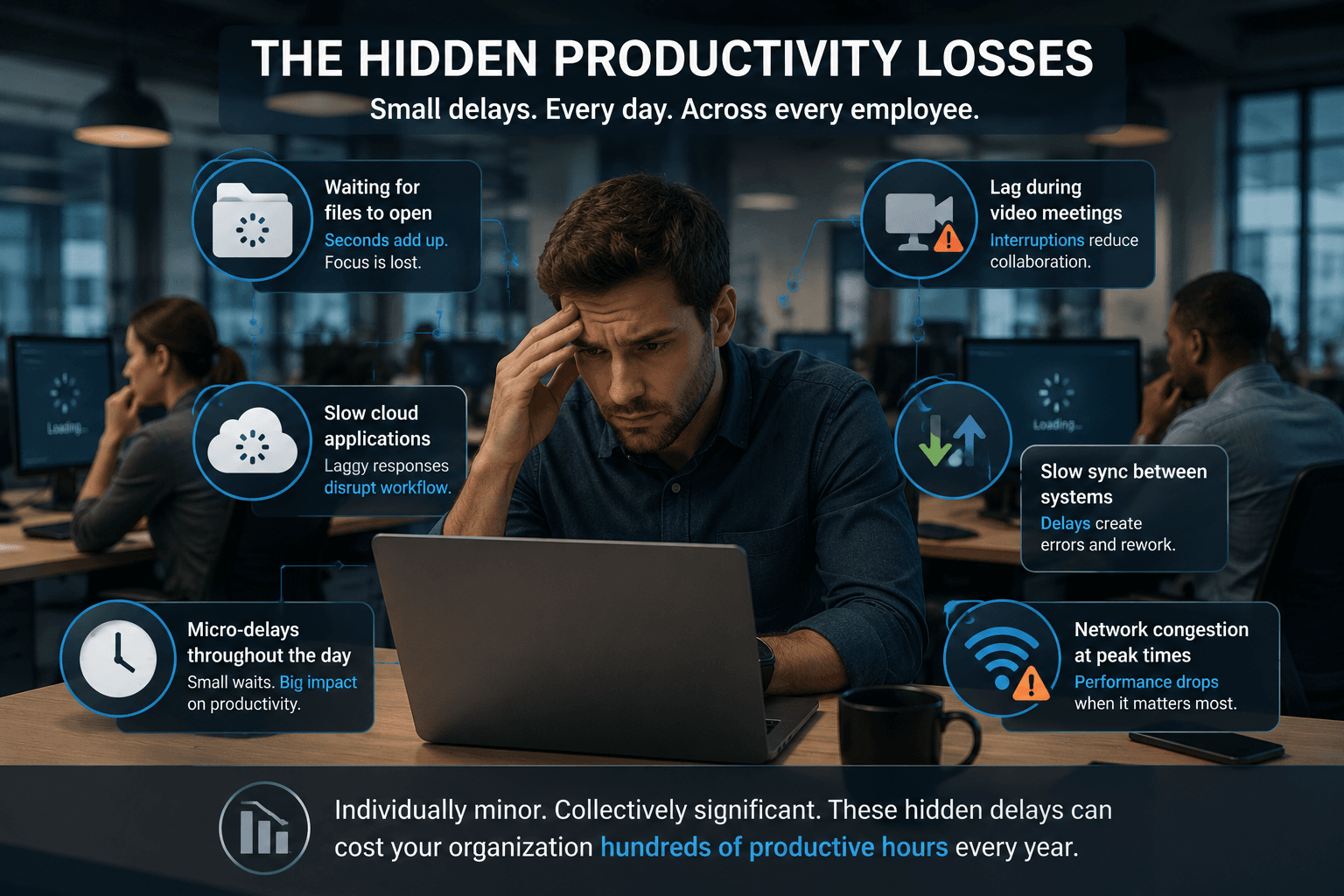
What appears to be a minor inconvenience can quickly multiply across an organization:
- Employees waiting for shared files to load
- Delays accessing cloud applications
- Slow synchronization between systems
- Lag during video meetings
- Network congestion during peak business hours
Individually, these delays seem insignificant. Collectively, they can consume dozens of productive hours every week.
Aging Infrastructure That Still Works
One of the most overlooked risks is infrastructure that continues functioning but no longer performs efficiently.
Organizations often postpone upgrades because:
- The server hasn't failed
- The network is still operational
- Applications continue to launch
- Users haven't complained
However, aging infrastructure frequently introduces performance degradation long before it reaches a critical failure point.
Older systems often struggle with:
- Modern cloud workloads
- Larger file sizes
- Increased data synchronization
- Security scanning processes
- Growing numbers of connected devices
The result is a gradual decline in performance that becomes difficult to detect because it happens slowly over time.
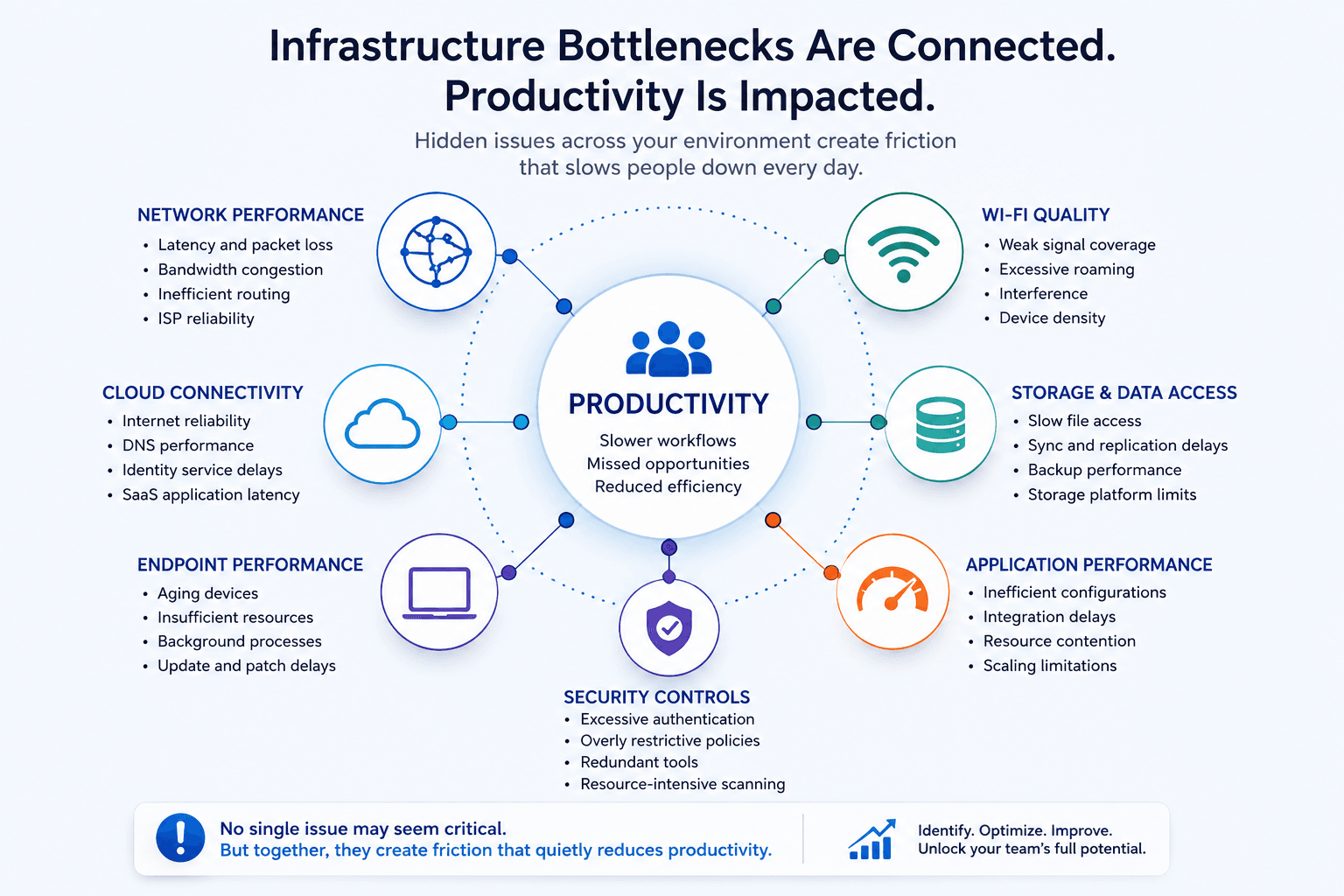
Wi-Fi Coverage Gaps and Roaming Issues
Many organizations assume their wireless network is performing adequately simply because users remain connected.
However, poor Wi-Fi design often creates hidden productivity losses:
- Devices switching repeatedly between access points
- Weak signal areas causing retransmissions
- Slow roaming between workspaces
- Increased latency during collaboration sessions
- Reduced performance for cloud applications
Employees may never report these issues because they experience them as random slowness rather than a network problem.
In reality, the wireless infrastructure may be introducing friction throughout the workday.
File Storage and Access Delays
Data growth is a natural part of business growth.
Unfortunately, many organizations continue using storage platforms designed for workloads that existed years ago.
Common symptoms include:
- Long file search times
- Delays opening shared documents
- Slow backups
- Synchronization conflicts
- Reduced performance during peak activity
Because users can still access their files, these issues are often ignored until productivity impacts become impossible to overlook.
Security Controls That Create Operational Friction
Cybersecurity is essential, but poorly aligned security controls can unintentionally slow business operations.
Examples include:
- Excessive authentication prompts
- Inefficient access policies
- Overly restrictive permissions
- Redundant security tools
- Security platforms competing for system resources
When security measures are implemented without considering workflow efficiency, organizations can experience productivity losses while believing they are simply strengthening protection.
The goal should be security alignment, not security complexity.
The Cloud Connectivity Assumption
Many organizations assume that moving applications to the cloud automatically improves performance.
In reality, cloud performance depends heavily on:
- Internet reliability
- Network architecture
- DNS performance
- Identity services
- Local infrastructure readiness
A cloud application may be operating perfectly while employees still experience delays due to bottlenecks elsewhere in the environment.
This often leads organizations to blame the software when the real issue lies within the supporting infrastructure.
Why These Problems Go Undetected
The most expensive infrastructure bottlenecks often share one characteristic:
They do not create obvious failures.
Employees continue working.
Applications remain online.
Systems appear healthy.
Yet productivity steadily declines.
Because the impact is distributed across many users and many small delays, organizations rarely connect the symptoms to a common infrastructure issue.
Moving Beyond Reactive IT
Traditional IT management focuses on fixing problems after they become visible.
Modern organizations benefit from a different approach: proactively identifying operational friction before it affects business performance.
This means evaluating:
- Network efficiency
- Wireless performance
- Cloud readiness
- Infrastructure scalability
- Security alignment
- External exposure
- Operational resilience
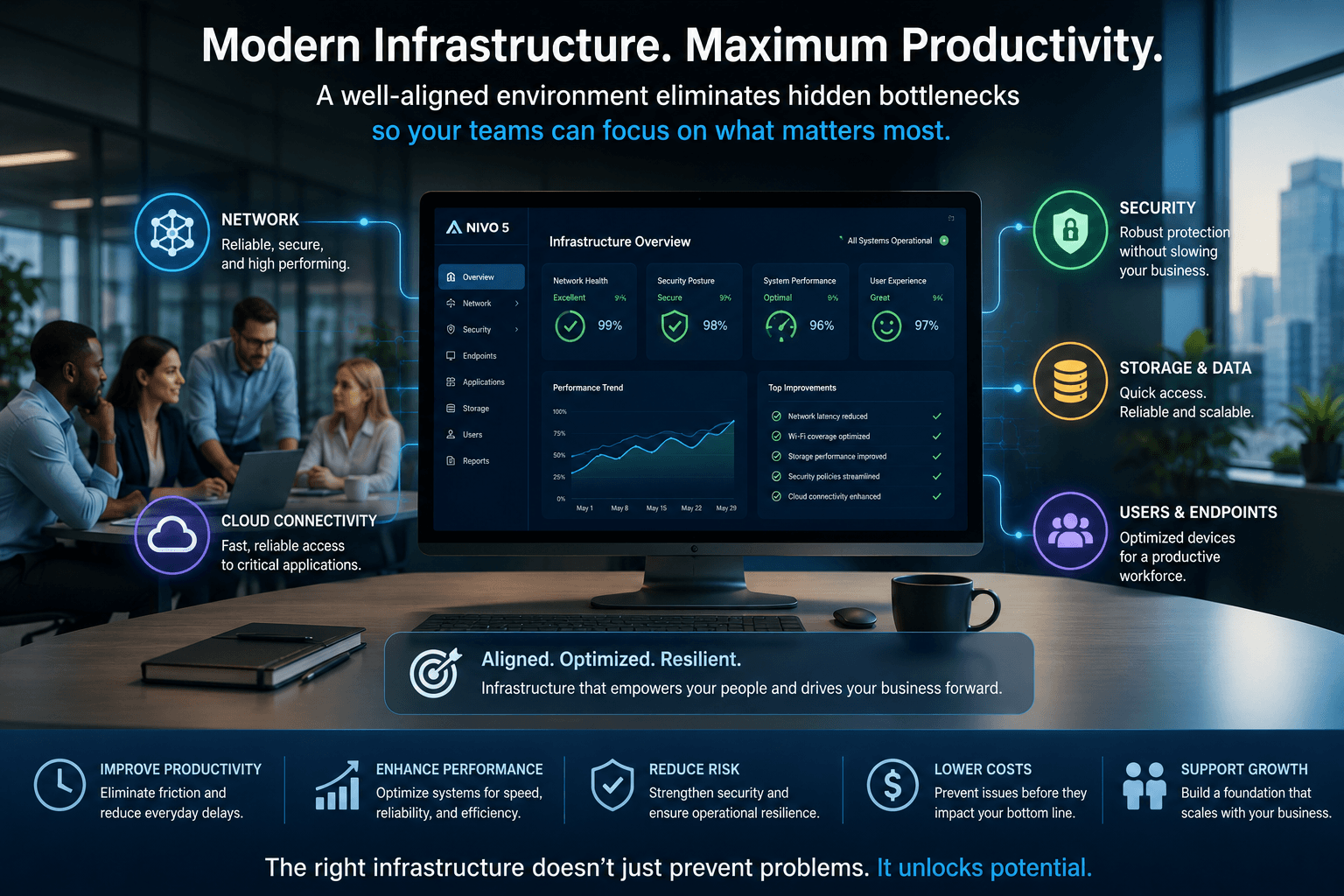
The objective is not simply to keep systems running. It is to ensure the technology environment supports productivity, growth, and business continuity without introducing hidden obstacles.
Final Thoughts
Infrastructure bottlenecks rarely announce themselves through outages or support tickets. More often, they reveal themselves through slower workflows, delayed collaboration, reduced efficiency, and gradual productivity loss.
Organizations that regularly assess their infrastructure performance gain a significant advantage. They identify hidden constraints before they become operational problems, allowing employees to work faster, collaborate more effectively, and focus on creating value rather than waiting for technology to catch up.
At Nivo 5, we help organizations uncover hidden infrastructure inefficiencies, operational risks, and technology constraints that often go unnoticed until they begin impacting productivity, resilience, and growth.